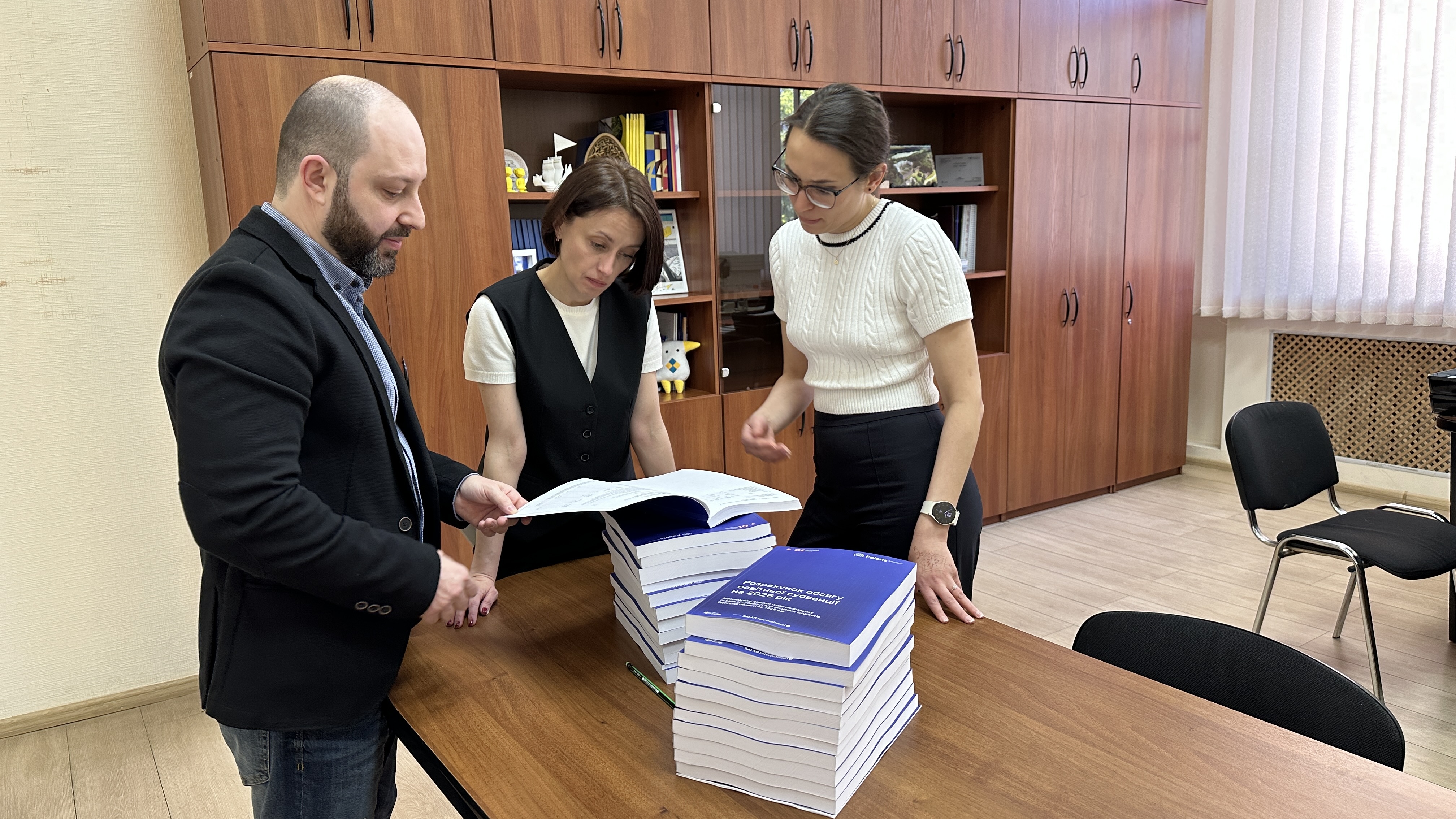
The Ministry of Education and Science of Ukraine has published information briefs on the distribution of the educational subvention for local budgets for 2026 on its website.
The information briefs are an analytical tool aimed at increasing the transparency and understanding of the educational subvention distribution formula. They provide explanations of the formula’s specific features, detailed calculations, and analytics for all territorial hromadas, 24 oblast budgets, and the budget of the city of Kyiv.
The briefs outline the structure of the educational subvention distribution, key indicators, and factors influencing the amount of funding. Ensuring open access to such data is critically important for informed analysis, effective planning of the educational network, and evidence-based decision-making at the local level.
The Swedish-Ukrainian Polaris Programme: Supporting Multilevel Governance in Ukraine provided support for the development of the information briefs, their dissemination, as well as the printing of copies for the Ministry’s further use, including during working meetings with representatives of territorial hromadas and oblast administrations.
The tool has been published for the fifth consecutive year and supports the decentralisation of education by strengthening the capacity of hromadas to make data-driven decisions.
The briefs contain detailed calculations for each territorial hromada and provide opportunities to analyse the effectiveness of the existing educational network, plan its development, make informed management decisions, and improve the quality of financial resource management.
The briefs are intended to improve understanding of the specifics of calculating the educational subvention from the state budget and may be useful for local self-government bodies, financial and education administrators, as well as everyone working to develop a high-quality and capable educational network.
The Polaris Programme will continue supporting the Ministry of Education and Science of Ukraine in implementing data-driven approaches, particularly in budgeting, education decentralisation, and education quality monitoring, in order to strengthen the capacity of local self-government, national institutions, and effective coordination at all levels of governance.