On 25–27 August, the Polaris Programme held training sessions for starostas from partner hromadas, “From Information to Joint Decisions: Communication and Participation Tools for Starostas”. This time, the training took place in Rokytne (Rivne Oblast) and Ruzhyn (Zhytomyr Oblast). Starostas and representatives of five hromadas participated in the training.
Together with Polaris experts Andrii Matsokin, Nataliia Mamchak and Pavlo Pushchenko, participants worked through situations that starostas face in their daily work: how to explain a complex decision to residents, which communication channel to choose, how to obtain not only complaints but also a clear picture of people’s actual needs, and how to involve residents in addressing issues affecting their village or starosta district.
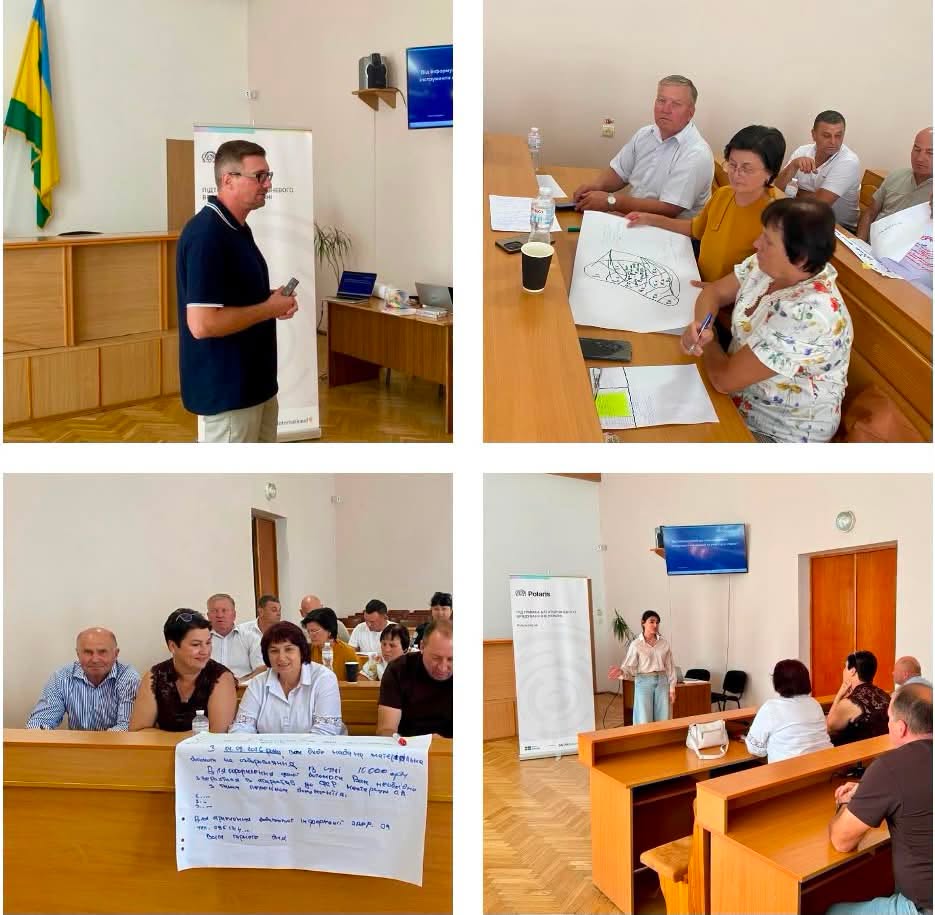
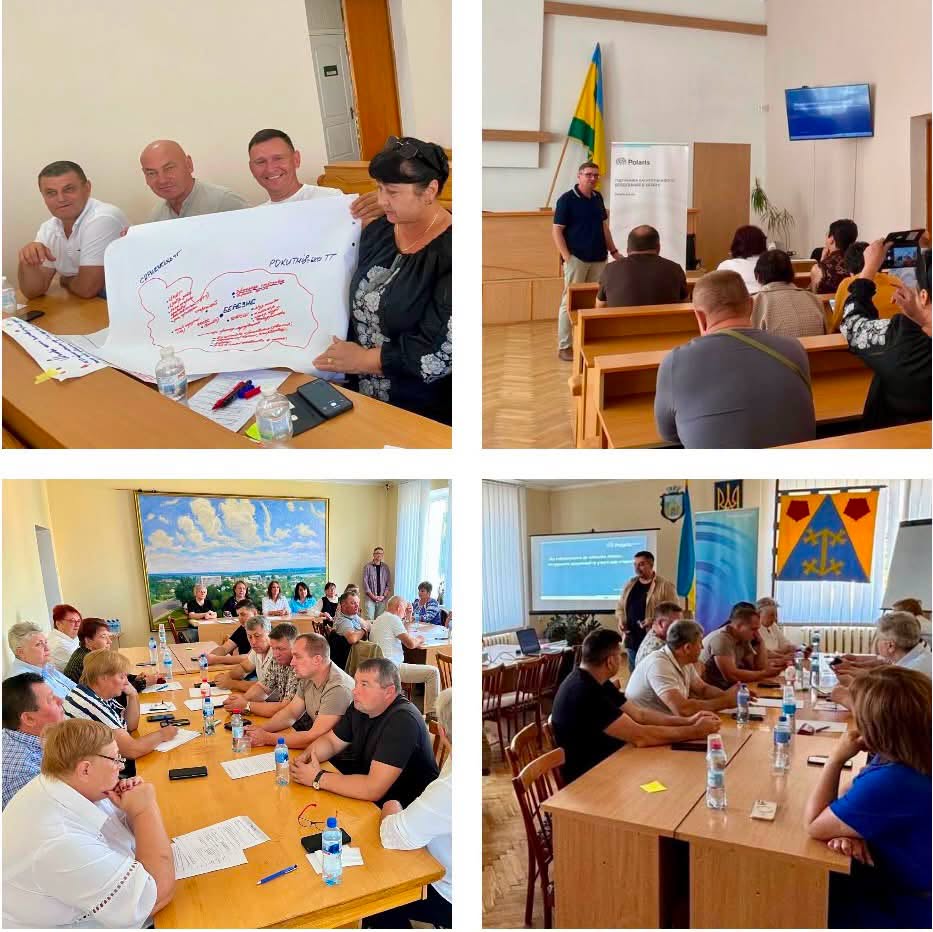
Instead of discussing abstract examples, participants worked with real-life situations: road repairs, temporary water supply interruptions, a new service in the hromada, changes to outpatient clinic opening hours, or issues causing concern among residents. They discussed what information people need, when and how it should be communicated, and how to collect feedback.
Another exercise focused on the “Hromada Needs Map”. Starostas identified important places in their hromadas, local problems and opportunities for development. They also explored different participation tools available in their hromadas and discussed which ones could work best in specific situations.
“A starosta works closely with residents every day and understands how important it is not only to stay in touch, but also to build trust. For me, the value of such meetings is that they help us look at our everyday work from a new perspective, learn from colleagues and find approaches that make communication with residents clearer, more open and more consistent,” said Lesia Kotvitska, Manager of the Executive Committee of Ruzhyn Settlement Council.
At the end of the training, each participant identified one specific action they planned to take afterwards — from improving the way information is communicated and conducting surveys to introducing new formats for meetings with residents.
The training sessions in Rokytne and Ruzhyn continued the series launched by Polaris in Shumsk and Rohatyn. All four sessions had a common goal: to strengthen the capacity of starostas not only to inform residents, but also to maintain an ongoing dialogue, better understand people’s needs and involve them in finding solutions together.